
As a starting point, the 2024 American Society of Plastic Surgeons report puts the surgeon's fee for rhinoplasty at $7,500 to $12,500. Once anesthesia, the facility, and a few smaller items are added, most patients pay well above even that range.
Prendiville Facial Plastic Surgery in Fort Myers, Florida, helps patients make sense of choices like this every day. Dr. Stephen Prendiville is a double board-certified facial plastic surgeon. He has focused only on the face for 25 years, and he has published on rhinoplasty. This guide breaks the price down piece by piece. You will see how it changes by procedure type, by location, by insurance, by how people pay, and by the surgeon.
The "price" of a nose job is really four to six separate bills stacked together. When you understand the parts, a quote stops feeling like a mystery.
The largest piece is the surgeon's fee. It usually makes up a little over half of the total. It reflects the surgeon's training, skill, and how complex your nose is. Next comes the anesthesia fee and the facility fee. Those cover the team, the accredited surgical suite, and your safe recovery on the day. Smaller items round it out.
Here is how the pieces typically break down. These are general national ranges, not any one practice's prices.

A couple of these often surprise people. Pre-op labs and your prescriptions are usually billed on their own. They may not appear in the surgeon's quote at all. Consultation fees also vary from office to office. Many practices credit that fee toward your surgery if you decide to go ahead.
Dr. Prendiville's own prices are separate from these national figures. At his Fort Myers practice, rhinoplasty starts around $10,000 and can reach $19,000 to $20,000. Anesthesia typically runs $3,500 to $5,000, and the consultation fee is $250 to $1,000, depending on the surgeon.
At Prendiville Facial Plastic Surgery, rhinoplasty is done in an accredited in-office surgical suite. Every patient starts with a private consultation and a full facial analysis. Your actual cost is reviewed with you there, built around your nose and your goals. It is never guessed from a chart.
Once you can see the parts, the next question is how the kind of surgery you need moves them.
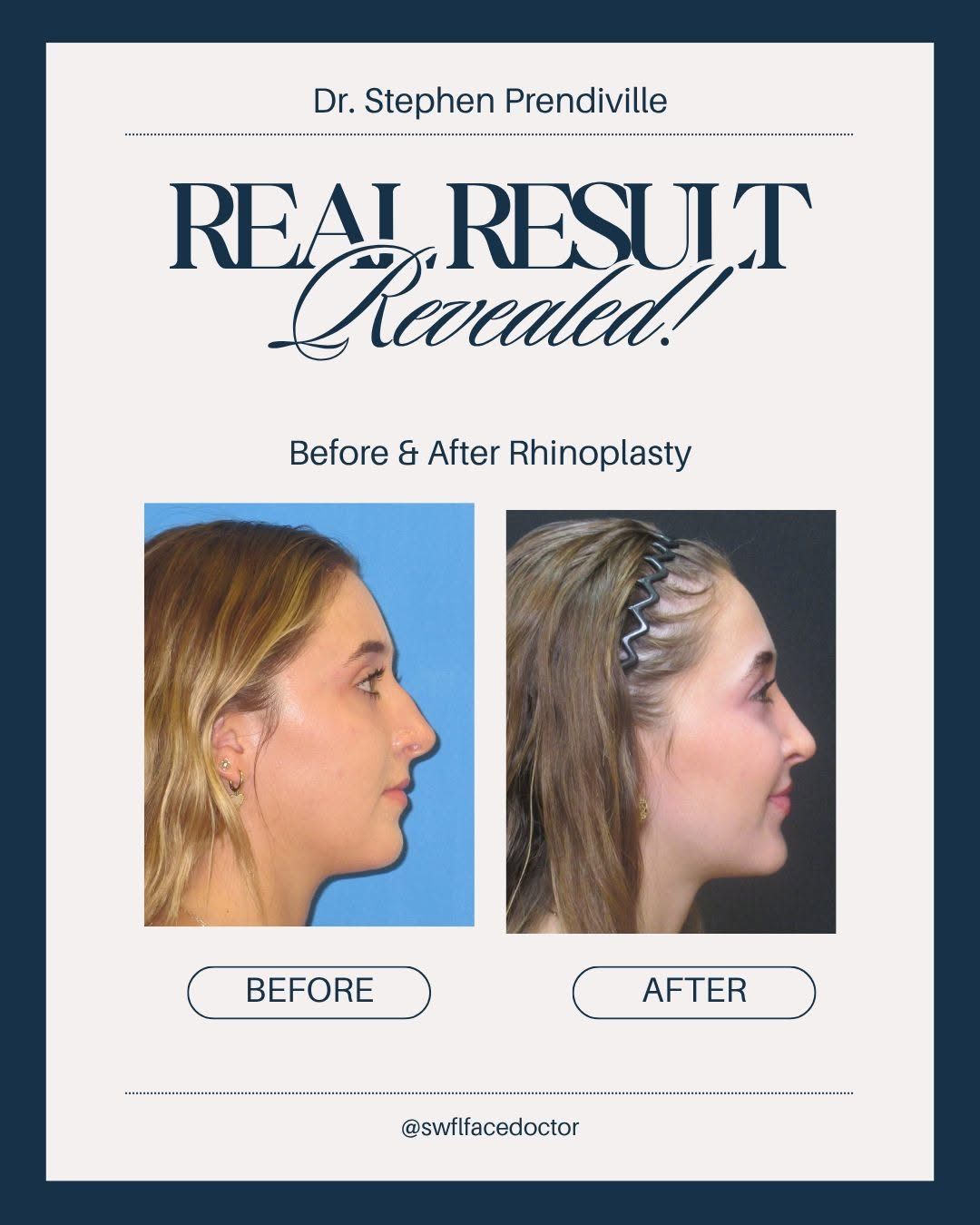
Not every nose job is the same operation. The type you need is the single biggest driver of cost. A simple refinement and a complex rebuild ask very different things of a surgeon.
A first-time cosmetic procedure is called a primary rhinoplasty. All-in, it typically runs between about $8,500 and $14,000. It can reach $25,000 in the priciest markets. A revision rhinoplasty is done to correct an earlier surgery, and it usually costs more. Scar tissue, changed anatomy, and cartilage grafting from the first operation make it longer and harder to perform. The table below shows how much higher it can run.
Smaller and non-surgical options sit lower. The ranges below are typical national figures, drawn from published cost data and industry averages rather than any one practice's prices.

A non-surgical "liquid" rhinoplasty uses filler. It is much cheaper upfront, but the result is temporary. It fades over time, so repeat treatments add up if you keep it going for years. One thing that is not a real price lever is the surgical technique. A surgeon chooses an open or closed approach to fit your anatomy, not to change the bill. A peer-reviewed review found no meaningful difference in outcomes between them.
Megan, a Prendiville Facial Plastic Surgery patient who chose a first-time rhinoplasty, shared her experience:
"I had a rhinoplasty with Dr. Prendiville in April 2024, and had a wonderful experience. My recovery wasn't painful at all. And the results are better than I could've imagined. I look like a refined version of myself."
Because your nose is one of a kind, so is your price. When you are ready, you can request a private consultation, in person or virtually, to talk through what is bothering you. There is no pressure to decide anything on the day.
Two people can have the same surgery and pay thousands of dollars apart. Often the only difference is where the operation happens. Geography is one of the biggest swings in cost.
Average costs run highest in the large, high-cost metros and are considerably lower in smaller, lower-cost markets.
Why such a gap? It tracks the local cost of doing business. A peer-reviewed analysis found that pricing lines up closely with the local cost of living. It barely lines up at all with how many surgeons are nearby. In plain terms, more competition does not push prices down the way you might expect. Rent, staffing, and overhead do most of the work.
This is why some patients travel for surgery, and Southwest Florida is a common destination. Prendiville Facial Plastic Surgery is based in Fort Myers. It runs a dedicated program for out-of-town patients, and sees many patients by virtual consultation from across the country. Traveling can make sense, but weigh the trade-offs honestly. A distant surgery means no easy in-person follow-up. If something needs correcting, a revision back home can cost far more than any savings. Cheaper is not automatically better, which leads straight into the question of insurance.
If part of your concern is breathing, and not just how your nose looks, insurance may enter the picture. The dividing line is simple to state and important to understand.
Purely cosmetic rhinoplasty is not covered by health insurance. The functional part of nose surgery often can be. Say a deviated septum causes real blockage, and it has not improved with several weeks of simpler treatment. Insurers generally cover that repair, called a septoplasty, under their published coverage criteria. Insurers usually ask to see notes, exam findings, and photos before they approve it.
Many people have both concerns at once. They have a nose that does not breathe well, and one they would like refined. In that case, the bill may be split, with the functional part going to insurance and the cosmetic part paid out of pocket. Benefits vary by plan, so check with your own insurer.
Tax-advantaged accounts follow the same logic. You generally cannot use HSA or FSA funds for cosmetic rhinoplasty. The IRS treats purely aesthetic surgery as ineligible. According to guidance from the IRS, a procedure aimed at appearance that does not meaningfully promote proper body function does not count as a medical expense, so the breathing-related part can qualify. Plan administrators often ask for a doctor's letter of medical need. Your insurer or plan administrator decides which parts, if any, count as functional. Once insurance is sorted, the rest is a matter of how you choose to pay.
Prendiville Facial Plastic Surgery does not accept insurance; the cost of your procedure is reviewed at your private consultation.
Most rhinoplasty is elective and paid out of pocket. So planning how to cover it is part of the process. A little knowledge here can save you real money and stress.
Patients generally use one of a few paths. Some save ahead in a dedicated account, which avoids interest entirely. Some use HSA or FSA funds for any functional part, as covered above. Others turn to medical financing. That includes third-party medical credit cards, medical loans, and payment plans that some practices offer directly.
Medical credit cards deserve a careful eye. They often advertise a zero-interest promotional period, but the fine print matters. A Consumer Financial Protection Bureau report found that most of these are deferred-interest plans. Miss the payoff window, and interest is charged back to the very first day. That rate is often around 27 percent. It can quietly turn an affordable surgery into an expensive one.
Payment policies differ a great deal from one office to the next. So for any single practice, the honest answer is to confirm the details directly with them. That way you know exactly what is available before you commit.
If you are weighing travel as part of your plan, you can learn how the process works for out-of-town patients. It includes a virtual consultation, so you can get started without a trip.
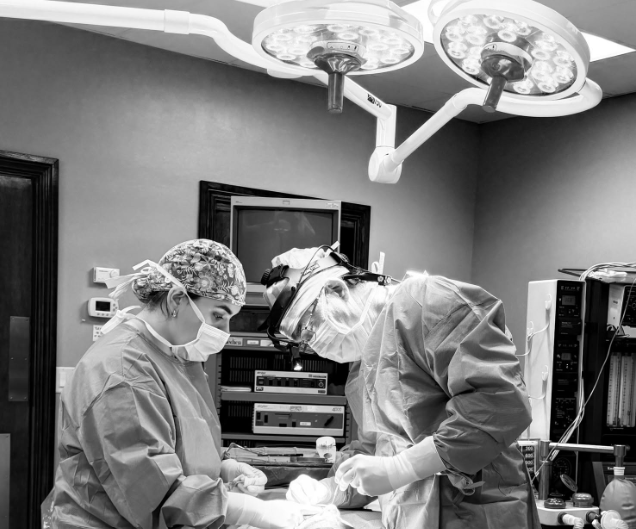
Here is the part of cost that matters most, and the one people rush past. The surgeon you choose shapes both your bill and, far more importantly, your result.
Highly specialized, double board-certified surgeons charge fees that reflect years of focused training. It is tempting to shop for a lower fee, but revisions are common, and they are costly.
A revision is harder, carries more risk, and usually costs far more than the first surgery did. So the cheapest path can easily become the most costly one. If you are weighing surgery or a revision, speak directly with Dr. Prendiville about his techniques, your own concerns about risks, and his experience and complication history with rhinoplasty.
Dr. Prendiville puts it plainly. A great result does not require the highest price in the country. It does require the right surgeon. His advice for choosing one is practical. Check board certification rather than trusting a state license alone. Be wary of anyone who calls themselves a "cosmetic surgeon," because that title does not mean board certification in facial plastic or plastic surgery. And ask any surgeon directly how many of your specific procedures they have done.
Lauren, a Prendiville Facial Plastic Surgery patient who compared several surgeons before deciding, shared her experience:
"I met with 8 different plastic surgeons for consultations throughout SWFL before choosing Dr. Prendiville. Three of them sent up immediate red flags. It was important for me to have a surgeon double board certified from the American Board of Facial Plastic and Reconstructive Surgery and the American Board of Otolaryngology. I did not want a 'jack of all trades' plastic surgeon operating on my face. The fact that Dr. Prendiville specializes exclusively in cosmetic and reconstructive facial plastic surgery weighed heavily into my decision."
Seen this way, the surgeon's fee is not the place to bargain. It is the part of the price most tied to whether you love your result.
Think back to that tidy number you found online. By now you can see why it almost never tells the whole story. Your real cost is a stack of fees. It shifts with the type of surgery, your location, your insurance, and above all the surgeon you trust with your face.
The best way to protect that investment is to focus on the result, not just the fee. Choosing well the first time is what spares you the far higher cost of a revision, in money and in time. When you are ready, the clearest next step is to see real results and get a plan built for your nose. You can explore what rhinoplasty can do and request a private consultation, in person or virtually, with no pressure to decide.
At his Fort Myers practice, Dr. Prendiville aims for natural-looking results, so people simply see you, looking like yourself. You can reach the practice through the contact page or by phone at 239-437-3900. We hope this guide helps, and thank you for reading.
No. Purely cosmetic nose surgery is elective, so you pay out of pocket. The functional part of nose surgery can be a different story. If it corrects a breathing problem, it may qualify for coverage.
It may. When a deviated septum causes real breathing blockage that has not improved with simpler treatment, insurers often cover the repair, called a septoplasty. If you also want cosmetic changes, the bill may be split between the functional and cosmetic parts, and benefits vary by plan.
Not for the cosmetic part, which the IRS treats as ineligible. If part of your surgery is medically necessary, such as fixing breathing, that functional part can often be paid with HSA or FSA funds. You usually need a doctor's letter of medical need.
A non-surgical filler rhinoplasty is much cheaper upfront, often $500 to $5,500 per session. It is temporary, though, and fades over time, so keeping the result means repeat treatments.
A revision usually costs more than a first-time procedure. The added cost reflects a harder operation. Scar tissue and changed anatomy from the earlier surgery take more time and often need cartilage grafting.
It comes down to the local cost of doing business. Higher rent, staffing, and clinic overhead in large metros push surgical fees up. The number of surgeons nearby has surprisingly little effect on price.
It varies by practice. Some offices charge a consultation fee, often around $100 to $300, and many credit that amount toward surgery if you proceed. Others do not charge one at all. The best approach is to confirm the details with the specific practice when you book.
Disclaimer: This article is for educational purposes only and is not medical advice. Individual results vary and are not guaranteed. Consult a qualified, board-certified facial plastic surgeon to determine the treatment that is right for you.

