Here is the good news. Fixing a nose is almost never about making it smaller. It is about finding the one part that is out of balance and adjusting it. Then the nose finally fits the rest of your face. A tip, a bridge, and a crooked line each come from a different cause. And each has its own solution.
At Prendiville Facial Plastic Surgery in Fort Myers, Florida, double board-certified facial plastic surgeon Dr. Stephen Prendiville has focused only on the face for 25 years. He performs every procedure himself. This article covers the most common nose concerns, one at a time. You will learn how to tell what is really causing the look, and what rhinoplasty can do for a bulbous tip, a wide nose, and a crooked one.
Before any plan, a surgeon finds the source of the concern. The same nose gets read from three angles: the front, the side, and from below. A surgical analysis of nasal shape checks each region on its own. That includes the bony bridge, the middle of the nose, the tip, and the base of the nostrils. The point is simple. Your surgeon is finding the exact structure behind the look, because the same appearance can have very different causes.
A nose can look wide because of the bony bridge, the middle section, or the nostrils. Sometimes it is a mix of all three. A nose can look crooked from the septum, the nasal bones, or both. A tip can look round from thick skin or from soft, rounded cartilage, even when the frame beneath is fine. Naming the real cause is what separates a plan that works from one that just guesses.
There is also a modern trap worth knowing. If your nose only bothers you in selfies, some of that may be the camera. According to one report, a close-up photo taken about 12 inches away can make the nose look roughly 30 percent wider than a photo from five feet.
This is where a focused specialist earns his place. Dr. Prendiville begins every plan with a look at your whole face, not just your nose. He names the true cause first, before anything else. Once you know which structure is driving the look, the right solution becomes much clearer. So let us start with the concern people ask about most: the tip.
A bulbous tip usually comes down to the cartilage at the end of your nose. That cartilage may be too curved, too wide, or a little weak. When it sits under thicker skin, the tip reads as round instead of defined. Knowing that combination matters, because it shapes what will actually help.
Surgeons work from gentle to strong. Fine sutures can narrow the tip cartilage by a millimeter or two to refine the shape. In selected patients, sutures can provide durable reshaping and support. Grafts are used when additional structural support is needed. These grafts often come from your own septum. When the tip is complex or needs grafting, an open approach gives the surgeon a clear, direct view.
Skin is the honest part of this conversation. Thicker skin hides fine detail and takes longer to settle. Thick-skinned noses can still improve, and the goal is real refinement, not a sharp point.
There is a limit worth respecting, too. Removing too much cartilage can leave a tip that collapses or looks pinched as it heals. That is why a careful surgeon keeps a minimum amount of support and reinforces the rim. This is the natural-results standard in action: a nose that still looks like yours.
Megan, a Prendiville Facial Plastic Surgery patient who wanted a refined tip that still looked natural, shared this experience:
"My recovery wasn't painful at all. The hardest part was waiting two weeks to get the cast and tape off, to see the results. And the results are better than I could've imagined. I look like a refined version of myself."
Wondering what is realistic for your own tip? Speak directly with Dr. Prendiville about his techniques, your concerns about risks such as collapse or pinching, and his experience and complication history with tip work. You can request a private consultation, in person or virtually, to talk through your goals. From the tip, the next common question moves up and out to the sides.
Wide is not one problem, which is why narrowing a nose is not one move. The width can live in the bony bridge, the middle of the nose, or the base of the nostrils. Each area is handled differently. The aim throughout is balance with the rest of your face, not the smallest possible nose.
An analysis of nasal proportions helps the surgeon plan, but there is no universal target. Nasal proportions vary with individual anatomy and facial characteristics. Here is how the three zones are usually handled.

For a wide bony bridge, surgeons use osteotomies. These are precise, planned repositionings of the nasal bones. For wide nostrils, alar base reduction removes a small wedge of tissue where the nostril meets the cheek. In one review of 124 patients, that wedge averaged under 5 millimeters per side. It is done carefully, so the nostrils do not pinch or notch.
The natural part is the real skill. Closing a wide bridge needs the middle of the nose supported, often with spreader grafts. Without that support, the bridge can pinch inward as it heals. A wide nose also often needs the tip refined at the same time. Balancing the whole nose looks far better than shrinking one part. To know which of these applies to you, speak directly with Dr. Prendiville about his techniques, your concerns about risks such as pinching, and his experience and complication history with nose narrowing. From shape and width, we come to the concern that worries people most: a nose that will not sit straight.
A crooked nose is often the most layered concern. The lean can come from the septum, the cartilage, and the nasal bones, sometimes all at once. In one study of 300 patients, crooked noses fell into several distinct patterns. That is exactly why there is no single fix. Your surgeon first has to map where the deviation is coming from.
Correction may require septal reconstruction, cartilage reshaping, osteotomies, and structural grafts. Because cartilage tends to drift back toward its old shape, the surgeon rebuilds the support around it instead of relying on it to stay put. External splints provide temporary postoperative stabilization. As Dr. Prendiville explains in one of his own recovery videos, a septorhinoplasty treats both the septum, the middle wall of the nose, and the outer shape in a single operation.
When crookedness comes with a blocked airway, that combined approach does double duty. A clinical trial found that, in appropriately selected patients, septoplasty improved breathing more than medication alone. That trial measured breathing after septoplasty, not cosmetic results. This is where being double board-certified in facial plastic surgery and in ear, nose, and throat surgery matters. One surgeon can address the shape and the breathing together.
Structural grafts do the straightening and the holding. Spreader and batten grafts act like internal splints. They stabilize the corrected nose and resist that drift. Honesty matters here. A crooked nose can be dramatically straightened, but perfect symmetry cannot always be promised, so surgeons plan for a small chance of drift. The reassuring part is reliability. A first-time septorhinoplasty is a well-established procedure, and most patients are happy with the result without needing a second surgery.
Lauren, a Prendiville Facial Plastic Surgery patient who chose a septorhinoplasty to correct a deviated septum along with cosmetic concerns, shared this experience:
"Wanting a septorhinoplasty to correct breathing issues from a deviated septum, in addition to cosmetic changes, it was important for me to have a surgeon double board certified. The fact that Dr. Prendiville specializes exclusively in facial plastic surgery weighed heavily into my decision. I cannot recommend Dr. Prendiville and his staff enough."
If a crooked nose is your concern, speak directly with Dr. Prendiville about his techniques, your own concerns about risks such as drift, and his experience and complication history with septorhinoplasty. You can explore his rhinoplasty approach and results to get a feel for what natural correction looks like. That brings up a fair question: how does a surgeon decide on the actual technique?
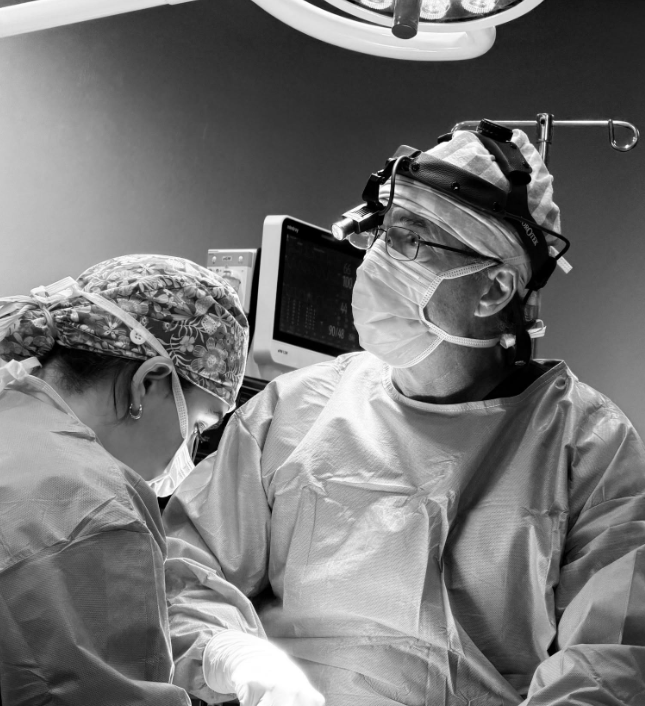
The technique follows the problem, never a trend. Open, closed, and preservation are simply tools. A good surgeon matches the tool to your nose. Knowing the differences helps you ask better questions in a consultation.
An open approach uses a tiny incision across the skin between your nostrils, which lifts the skin for a full, direct view. A meta-analysis comparing more than a thousand patients found open and closed rhinoplasty reached similar outcomes when each was matched to the right nose. Preservation rhinoplasty keeps your natural bridge line by lowering it rather than removing it. It suits certain noses. Patient selection depends on dorsal anatomy, underlying structural characteristics, and surgical goals. Thin skin is not a universal requirement.

There is a trade-off with each. Preservation can leave fewer small bumps along the bridge. Hump recurrence is a recognized possibility, but the comparative risk depends on the technique and on patient selection, so it is not right for every nose. The other big decision is grafting versus removal. When a nose needs long-term support, adding cartilage is preferred over simply removing it. Taking away too much structure can weaken the nose over time.
None of this is a choice you make alone or off a menu. As Dr. Prendiville describes it, rhinoplasty is a functional, highly precise surgery that needs expert planning and long-term care. That is exactly why the technique is decided with your surgeon. Speak directly with Dr. Prendiville about his techniques, your concerns about risks such as a returning bump, and his experience and complication history with each approach.
Think back to that photo that first caught your eye. Whether it was a round tip, a wide bridge, or a nose that leaned, you can see now that the answer is not a smaller nose. It is a balanced one, matched carefully to the cause behind the look. That is a hopeful thing to know.
The honest, specific answer for your nose can only come from a real evaluation. That can be in person, or from another city through a virtual visit. Because rhinoplasty draws people from far away, the practice welcomes out-of-town patients with virtual consultations. Choosing a true facial specialist with real experience matters more than anything.
That is the aim of this work with Dr. Prendiville in Fort Myers: a refined, natural result that still looks like you. When you are ready to talk through what is bothering you and what is possible, you can request a private consultation or call 239-437-3900. Thank you for reading, and take the next step whenever the time feels right.
Rhinoplasty reshapes the outside of the nose, while septoplasty straightens the inside wall (the septum) to improve breathing. When both the shape and the airway need work, surgeons combine them into one procedure called a septorhinoplasty. That way you address form and function in a single operation and one recovery. Speak directly with Dr. Prendiville about whether you need both: how he combines the two, what worries you, and his experience and complication history with septorhinoplasty.
Not exactly. Thicker skin hides fine detail and tends to swell for longer, so the definition is softer than in thin skin. The good news is that thick-skinned patients often report high satisfaction over the long term, once the swelling settles. To know what is realistic for your skin, speak directly with Dr. Prendiville about his approach, your own concerns, and his experience and complication history with thick-skinned noses.
Yes, when it is planned that way. A functional rhinoplasty, often combined with septum work, can open blocked passages while it refines the outer shape. Many people choose to correct their breathing and appearance together. To find out whether your breathing needs attention too, speak directly with Dr. Prendiville about his functional approach, your own concerns, and his experience and complication history with combined surgery.
Yes. Alar base reduction removes a small wedge of tissue where the nostril meets the cheek, which narrows a wide or flared base. The key is doing it carefully, to keep the nostrils natural and protect breathing. Done well, the change is subtle and balanced.
Tipplasty reshapes only the cartilage of the nasal tip, without changing the bridge or the nasal bones. A full rhinoplasty is broader and can address the bridge, the bones, the septum, and breathing. Tipplasty can be enough when the tip is the only concern. Speak directly with Dr. Prendiville to hear which one he would recommend for you, raise your own concerns, and ask about his experience and complication history with each.
Often, yes. A structured approach can realign shifted bones, rebuild damaged cartilage, and repair a bent septum after an injury. The goal is to restore both a straighter look and comfortable breathing. Old fractures can be more complex. Speak directly with Dr. Prendiville about how he would repair yours, your own concerns, and his experience and complication history with rhinoplasty after an injury.
Absolutely, and that is usually the better goal. Modern rhinoplasty focuses on balance and harmony with your other features, not on shrinking the nose. The aim is a nose that suits the rest of your face. This natural-results philosophy is central to how Dr. Prendiville works.
Grafting is preferred whenever the nose needs lasting support, such as a weak framework, a low bridge, or revision surgery. Adding cartilage stabilizes the shape and protects breathing, while removing too much can lead to collapse over time. Many noses need a mix of gentle reshaping and reinforcement. To know what your nose needs, speak directly with Dr. Prendiville about when he grafts, your own concerns, and his experience and complication history with grafting.
Much of the initial swelling improves during the first several months. Subtle changes in nasal definition can continue for 12 months or longer, especially at the tip and with thicker skin, and healing varies from person to person.
Disclaimer: This article is for educational purposes only and is not medical advice. Individual results vary and are not guaranteed. Consult a qualified, board-certified facial plastic surgeon to determine the treatment that is right for you.

