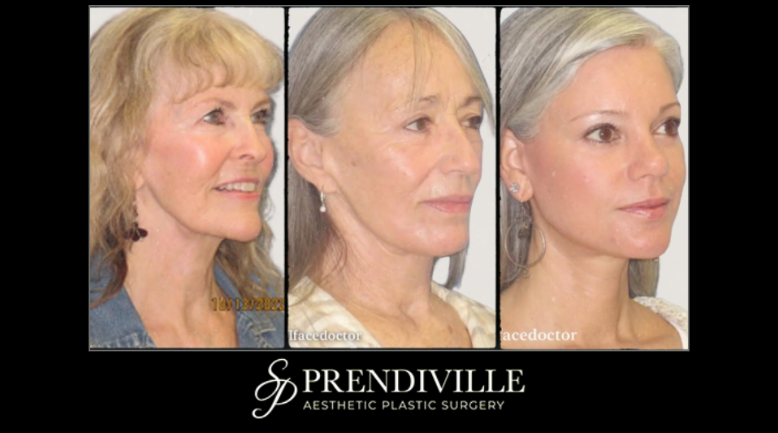
The reason this works is that the face does not age all at once. The brow and eyes, the cheeks, and the jawline and neck each soften on their own timeline. That is why a single "whole face" approach can over-treat a zone that is still holding up and under-treat the one that actually bothers you.
This is where targeted lifts come in. An upper, mid, or lower face lift each focuses on one region, so the plan can match where you have actually changed. A regional approach may be appropriate when aging changes are concentrated in a specific area. Natural-looking results depend on anatomy, procedure selection, technique, and healing, not simply on treating fewer regions.
The guidance here reflects how Dr. Stephen Prendiville approaches the face at Prendiville Facial Plastic Surgery in Fort Myers, Florida. He is a double board-certified facial plastic surgeon who has focused only on the face for 25 years.
Below, we will walk through what each regional lift treats, how they compare on recovery, longevity, and cost, and how to decide which one, or which combination, fits your face.
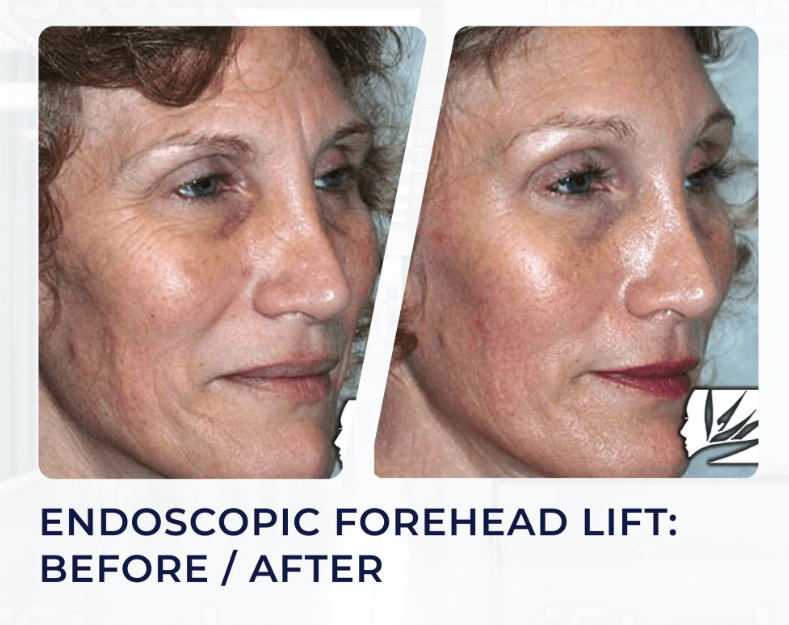
An upper face lift works on the top third of the face. That means the forehead, the brow line, and the area around the eyes. In plain terms, an "upper face lift" is essentially a surgical brow lift, sometimes called a forehead lift. It is a different procedure from a classic facelift, which addresses the lower two-thirds of the face.
The goal is to lift brows that have drifted down and started to read as tired or even a little stern. It softens horizontal forehead lines and the vertical "11s" between the brows. Done well, it opens up the eyes without changing their shape, and restores balance between the upper and lower face.
Most often this is done with an endoscopic brow lift, a minimally invasive approach. Through three to five small incisions hidden just behind the hairline, the brow is gently elevated and the muscles that create frown lines are released. Incisions are placed within or near the hair-bearing scalp so scars are less conspicuous, though scars are permanent and how visible they are varies, and the technique is designed to avoid the heavy or "surprised" look of older methods. In one published study of 312 endoscopic brow lifts, the reported complication rate was under 1 percent.
This is where people often get confused, so it is worth separating. A brow lift handles the brow and forehead. Sagging upper-lid skin or under-eye puffiness is treated with eyelid surgery, known medically as blepharoplasty, which removes excess skin and repositions fat. The two are frequently paired, because they sit right next to each other.
The constant "you look tired" comment usually traces back to this upper third. It comes from the descent of the eyelid-cheek junction and a little fat pushing forward around the eye. These are normal aging changes, and they can be softened with procedures that look refreshed rather than operated on. Good candidates are typically in their late thirties through fifties, with brow heaviness that creams and injectables can no longer reach.
The midface is the central part of your face, running from the lower eyelid down to the corner of the mouth. It holds the cheeks and the nasolabial folds, the lines that run from the nose to the mouth. As we age, the cheek fat pad slides downward. The cheek flattens, the fold deepens, and a hollow can appear under the eye where the cheek used to sit.
A mid face lift, also called a cheek lift, repositions that descended cheek fat back up where it belongs. This restores cheek projection and softens the fold. It can also lift the under-eye area, which is why a flat midface and a tired-looking lower lid often improve together. A published study following midface lift patients for five years found lasting improvement in cheek position.
A mid face lift differs from a full facelift in what it targets. The mid lift works only the central third with an upward lift, while a full facelift uses longer incisions to address the lower face and neck as well. Incisions for a cheek lift are placed to be less conspicuous, in the temporal hairline, just under the lower lashes, or even inside the mouth.
There is an important point Dr. Prendiville makes here about volume. A well-performed deep plane facelift is, in his words, "self-volumizing." By lifting the deeper tissues back into place, it naturally restores fullness to the cheek, so separate filler or fat is often unnecessary. He adds volume, such as Sculptra, only when someone is genuinely hollow, describing it as "like fertilizer for collagen." His caution on filler is honest.
Filler does not lift tissue that has descended, and in some patients it can linger for years or begin to look less natural. The aim is fuller cheeks, never overdone ones. If a cheek lift is on your mind, you can request a private consultation with a board-certified facial plastic surgeon, in person or virtually, to talk it through.
The lower third is where most people first picture a facelift. This is the area of jowls, a softening jawline, and the upper neck. A lower face lift works on the deeper support layer, called the SMAS, along with the platysma muscle, and repositions sagging tissue to rebuild a clean jawline.
This is the region where the deep plane technique matters most. In a deep plane facelift, which is the basis of the Prendiville Signature Lift, the skin is raised only partially. The deeper structures are then released and lifted together, along the muscles of the cheek and neck. As he explains it, this creates a powerful yet natural lift with real definition along the jaw, and the skin is closed without tension. That lack of tension is a big part of why the result looks natural and can help the scars heal.
This is one of the most common questions, and the answer is reassuring. Dr. Prendiville is direct about it: "the best neck lift is a facelift, a deep plane facelift." The platysma muscle ages downward and forward and carries the skin with it. So the neck is reshaped as part of the lift, often with a little liposuction of the neck and tightening of that muscle, rather than as a separate add-on. A deep plane facelift as Dr. Prendiville performs it also includes a deep neck lift. That can mean removing fat beneath the platysma muscle, reducing the front part of the digastric muscles under the chin, and reducing the submandibular glands, the salivary glands that sit under the jawline. It is not necessary for every patient, but it is commonly performed, and it greatly enhances the neck result. For even deeper changes, deep neck contouring can be combined with the lift. Incisions are placed around the ear, where they are less conspicuous as they heal.
Louise, a Prendiville Facial Plastic Surgery patient who chose a deep plane facelift, shared her experience:
"I recently underwent a deep plane facelift, CO2 treatment, and lip lift with Dr. Prendiville, and I could not be more thrilled with my experience. From my very first consultation, I felt completely confident and at ease."
It makes sense to weigh these three things together, because they tend to move in the same direction. The lighter and shallower the lift, the faster you heal and, generally, the shorter the result lasts. The deeper the lift, the more downtime, and the longer it holds.
Recovery follows that pattern. A brow or cheek lift is on the lighter end. Most brow lift patients are back to daily activities in about 7 to 10 days. A deep plane lower or full lift asks for more. One deep plane patient, who also had lower-eyelid surgery, felt "100 percent normal" by six weeks, with a settling jawline and neckline. That was one patient's experience; recovery runs at a different pace for everyone. The general healing arc is similar for any region. These are general ranges. How fast you heal depends on how extensive the surgery is, whether regions are combined, and your own health, anatomy, and healing. Swelling peaks in the first two to three days, sutures come out within a week to ten days, and the final result keeps refining over several months.
Longevity tracks with depth as well. A deep plane lower or full lift tends to last the longest. A meta-analysis of facelift studies found that both deep plane and SMAS techniques produce robust, long-term results with high patient satisfaction. In general, a deep plane lift produces very long-lasting results, while more superficial techniques tend to have more limited longevity. A facelift does not stop aging, and no procedure has a guaranteed lifespan.

On cost, a word of honesty. These figures are general national averages, not this practice's pricing. As a reference point, an American Society of Plastic Surgeons report puts the average surgeon's fee for a brow lift around $5,460, with a mid face lift commonly running higher. A deeper, more comprehensive lift costs more than a single targeted region.
What matters more than any sticker price is the surgeon and the technique. Technique and surgeon experience matter here, not just price. This is why your plan, and its cost, should be reviewed personally rather than guessed online. If you would like to understand your own options and what they involve, you can request a private consultation with Prendiville Facial Plastic Surgery, in person or virtually.
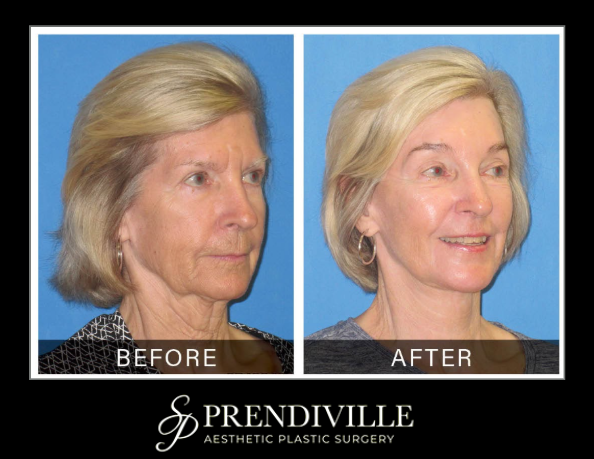
Start with your concern, not the procedure name. If the brow and eyes draw your attention, look to the upper face. If your cheeks have flattened or your under-eye looks hollow, the midface is the target. If jowls and the jawline bother you, that is the lower face. Often more than one zone has changed, and that is where a thoughtful combination comes in.
Combining regions in a single surgery can give a balanced, harmonious result and one recovery instead of several. These pairings are customized to you, such as a facelift with a brow lift, or a facelift with laser resurfacing and Sculptra. There is a sensible safety note here too. Adding more procedures does raise the overall risk somewhat, which is exactly why combinations belong with an experienced surgeon and a personalized plan. The way to weigh that for your own case is to talk it through with Dr. Prendiville: his technique, your concerns about risks and complications, and what he has seen across his own patients.
Several things guide the decision, and an honest exam weighs them all together:
A full or deep plane lift becomes the better choice when aging spans the whole face, so one refreshed area does not clash with an untreated one. Non-surgical treatments like radiofrequency microneedling or Sculptra can complement surgery, but they do not replace it when there is real descent. This is the heart of the decision, and it is where a facial-only, double board-certified surgeon earns their place. The right plan is matched to your anatomy, not pulled from a menu.
Deborah, a Prendiville Facial Plastic Surgery patient who combined several procedures, shared her experience:
"I was nervous about getting such a major surgical procedure but after meeting Dr Prendiville and his staff I felt so much more at ease and excited. I booked a facelift and neck, deep plane, CO2 laser face and sculptra injections."
Think back to that moment in the mirror, when one part of your face caught your eye. That single observation is more useful than it seems. The brow and eyes, the cheeks, or the jawline and neck each point toward a different targeted lift, and naming your main concern is the first real step.
A simple way to start is to look at your own face and ask which zone bothers you most. From there, a deep plane facelift or a lighter regional lift can be matched to what your anatomy actually needs. An exam is the only way to know for certain, which is also why a precise cost cannot be quoted online.
When you are ready, Dr. Prendiville welcomes you for a private consultation, in person or virtually, to talk through what bothers you and see what is possible. The aim is never a different face. It is a refreshed, natural result that still looks like you. You can reach the office through the contact page or by phone at 239-437-3900.
Each targets a different third of the face. An upper face lift, or brow lift, addresses the forehead and brows. A mid face lift restores the cheeks and softens the folds beside the nose. A lower face lift treats the jowls, jawline, and upper neck. Many patients combine more than one for a balanced result.
National averages, not this practice's pricing, put a surgical brow lift in the mid four figures for the surgeon's fee, with added costs for anesthesia and the facility. Your own cost depends on your anatomy and plan, and it is reviewed at a private consultation rather than quoted online.
Market figures for a mid face lift generally run higher than a brow lift and vary widely by region and surgeon. These are general ranges, not a price for this practice. Because the right approach is tailored to your face, a real number comes from a personal exam.
A lower or deep plane lift is usually the most involved of the three, so it typically costs more than a single lighter region. Any figure you see online is a national average, not this practice's fee. Your personalized cost is reviewed at a private consultation.
In most cases, yes. As Dr. Prendiville puts it, "the best neck lift is a deep plane facelift." The same muscle that ages along the jaw continues into the neck, so the neck is usually reshaped as part of the lift rather than treated separately.
A brow lift addresses the brow and forehead. Sagging upper-lid skin or under-eye puffiness is treated with eyelid surgery, or blepharoplasty. The two are often done together, because lifting the brow alone does not remove excess lid skin. Your surgeon can tell you which one, or both, your face needs.
A cheek lift generally maintains its result for several years before natural aging continues. Longevity depends on your tissue, your skin quality, and how your face ages over time. A deeper lift tends to last longer.
Incisions are placed to make scars less conspicuous, but scars are permanent and how visible they are varies from person to person. An endoscopic brow lift uses small incisions within the hair-bearing scalp rather than on the face. Facelift incisions are placed around the ear, where they fade over time. Closing the skin without tension also supports healing.
Disclaimer: This article is for educational purposes only and is not medical advice. Individual results vary and are not guaranteed. Consult a qualified, board-certified facial plastic surgeon to determine the treatment that is right for you.

